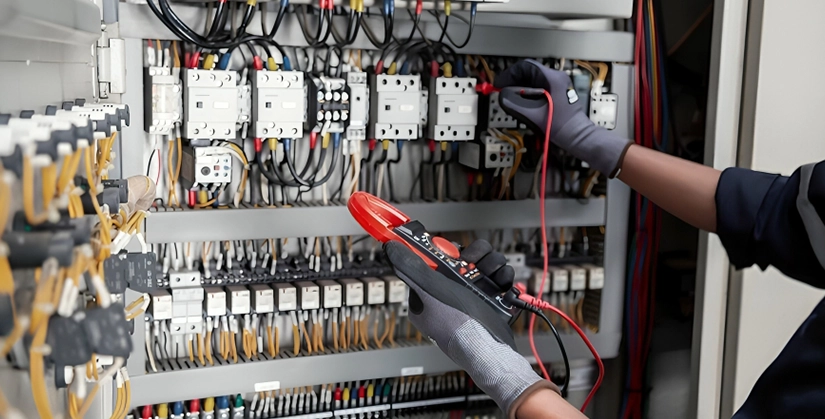
Dedicated Circuit Installation in Spring Valley, WI
If your microwave makes the lights dip, or your garage fridge keeps tripping a breaker, your panel might be begging for a dedicated line. A dedicated circuit gives one appliance or one high-demand area its own path back to the breaker, so it doesn’t fight for power with the rest of the house. Around Spring Valley, WI, we see this a lot in kitchens, older basements, workshops, and laundry rooms. Our goal is simple: keep loads stable, keep wiring protected, and keep you from babysitting the panel every week.
You’ll get a clear plan first. We look at the panel space, the wire route, the right breaker type, and the load needs of the equipment. The work stays tidy, code-correct, and sized properly, because “close enough” is how heat builds up where it shouldn’t.
What we install for dedicated loads:
- Laundry circuits sized for modern washers, electric dryers, and proper receptacle types
- Kitchen appliance circuits for microwaves, dishwashers, disposals, and countertop receptacles
- Garage and workshop circuits for compressors, heaters, freezers, and heavy-use tools
- Bathroom circuits with the right GFCI/AFCI protection and correct outlet placement
- Basement and utility circuits for sump pumps, dehumidifiers, and mechanical equipment
Once the circuit is in, we test it under real conditions, label the panel clearly, and confirm the device is running the way it should. If the route needs fishing through walls or running conduit in utility spaces, we keep it clean and explain what we’re doing as we go. Nobody likes surprises, especially inside drywall.
How We Plan, Run, And Verify Each New Circuit
A solid install starts with the boring stuff, honestly: load checks, breaker sizing, and wire selection that match what you’re plugging in. Dedicated Circuit Installation looks simple on paper, but the details matter, like correct conductor size, proper grounding, correct box fill, and making sure the circuit lands on the right breaker and bus. In Spring Valley, WI homes, we often need to work around finished basements, packed utility rooms, or older panels that weren’t built for today’s loads.
We’ll map the path from panel to outlet or disconnect, then choose the safest, cleanest route. Sometimes that’s through joist bays, sometimes it’s conduit where it makes sense. Either way, we secure everything properly, protect the cable, and keep junctions accessible. Then we verify polarity, grounding, and protection devices so the circuit behaves when it’s under stress, not just when it’s “idle.”
What’s included in the install process:
- Load review to confirm the circuit size matches the appliance or equipment demand
- Breaker selection and placement, including AFCI/GFCI requirements where applicable
- Cable or conduit routing is planned to protect wiring from damage and moisture
- Outlet, receptacle, or disconnect installation set at practical, code-appropriate locations
- Final testing, panel labeling, and a walkthrough so you know what powers what
After we wrap up, you’ll know exactly which breaker controls the new circuit, what it serves, and how to spot early warning signs later. If you’re adding equipment soon, tell us. Planning ahead can save you from tearing things open twice. Border Electric is available Monday through Friday, 7:30 AM to 5:30 PM, and you can reach us at (651) 380-5404.
Why Choose Us
Clear Labeling
You’ll get panel labels that actually make sense, plus a quick walkthrough so you can shut off the right circuit fast when something acts up.
Clean Routing
We run wiring with care, protect it where needed, and keep junctions accessible, so future service stays simple instead of a scavenger hunt.
Straight Answers
You’ll hear what your home can support, what needs upgrading, and what can wait. No vague talk, just practical steps that fit your situation.
FAQ's
A dedicated circuit is a single breaker and wire run that serves one appliance or a specific high-load need. You usually need one for microwaves, dishwashers, disposals, sump pumps, garages, and most EV chargers.
Pricing depends on distance from panel to device, finished-wall access, panel capacity, and whether AFCI/GFCI protection is required. Most projects land higher when we’re fishing through finished spaces or upgrading the panel.
Sometimes, yes. We may be able to use approved solutions like reorganizing circuits, adding a subpanel, or replacing certain breakers where allowed. If the panel is undersized or outdated, a service upgrade may be the right call.
Often, yes. Many living areas require AFCI, and wet or utility locations often need GFCI. We match protection to the location and use, then test it to confirm it trips correctly.
Many installs take a few hours, but longer runs, finished walls, or tricky routing can push it to most of a day. We’ll give you a realistic plan upfront and keep the work area under control.