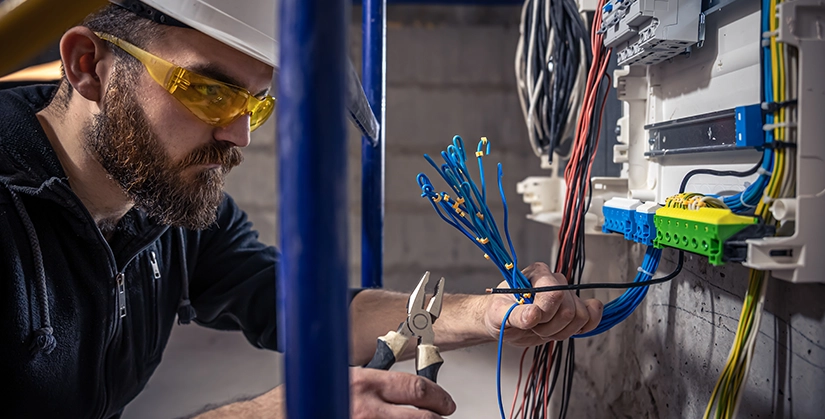
Residential Wiring & Rewiring in Bay City, WI
If your lights flicker when the fridge kicks on, something’s off, and it’s not just “an old house thing.” In Bay City, a lot of homes have had a few decades of add-ons, quick fixes, and DIY surprises tucked behind drywall. That’s where smart planning and tidy electrical work matter. A proper wiring check looks at your panel, grounding, circuit loads, and the condition of existing cable and connections, not just the one outlet that quit.
Before we touch anything, we map the circuits, verify breaker sizing, and check for trouble spots like loose neutrals, overheated splices, backstabbed receptacles, and worn insulation. Then we lay out a wiring plan that makes daily life easier: enough circuits for kitchens, bathrooms, laundry, and home offices, plus protection that actually works when it needs to.
What we inspect and plan for first:
- Panel capacity and breaker condition (including signs of heat damage)
- Grounding and bonding so breakers trip when they should
- Kitchen, bath, garage, and outdoor protection requirements (GFCI/AFCI)
- Circuit load planning for appliances, HVAC, and modern electronics
- Clean device connections, proper box fill, and safe wire routing
After the plan is set, we pull permits when required and schedule inspections so the work gets signed off the right way. You’ll get labeled circuits, cleaner performance, and fewer weird “why did that trip?” moments. Details matter, and the goal is simple: reliable power that feels boring, in a good way.
Whole-Home Rewiring Done Clean and Careful
Some houses don’t need a full overhaul, and some absolutely do. When wiring is aging, modified too many times, or showing safety red flags, a full or partial rewire becomes the sensible next move. In Bay City homes, we often run into older two-wire circuits with no grounding, aluminum branch wiring in certain eras, overcrowded junction boxes, or “mystery” connections buried in walls. Those issues can lead to hot spots, nuisance tripping, or worse.
We take a room-by-room approach and keep the job organized. We protect floors, cut only what we have to, and fish wires through walls and attics when possible. You’ll know what’s getting replaced, what stays, and why. The plan also includes where you actually want switches, lights, smoke/CO alarms, and outlet spacing that doesn’t leave you juggling power strips.
Common rewiring upgrades we handle:
- Replacing unsafe or brittle wiring and correcting bad splices
- Adding grounded circuits where older wiring never had them
- Dedicated circuits for fridge, microwave, dishwasher, laundry, and sump pump
- Smoke/CO alarm wiring and placement updates for safer sleeping areas
- Switch and outlet updates, including tamper-resistant options
Once the rough wiring is in, we tighten up terminations, test everything, and label the panel so you’re not guessing later. Final checks include outlet polarity, grounding continuity, GFCI/AFCI function tests, and load verification. Done right, the home feels more stable the moment you start using it. No drama, no guesswork, just solid power.
Why Choose Us
Clear Scope
You get a written plan that spells out circuits, devices, and access points, so the wiring work stays predictable and you aren’t stuck decoding electrician-speak later.
Neat Work
We keep cuts small, protect surfaces, and clean up daily. Your home doesn’t turn into a construction zone just to fix electrical problems.
Real Testing
We don’t “swap and hope.” We verify grounding, polarity, breaker sizing, and protection devices so the system performs safely after the job is done.
FAQ's
If breakers trip often, lights dim, outlets feel warm, or you smell a faint burning odor near devices, it’s time to get it checked. Also watch for two-prong outlets, ungrounded circuits, or a panel that’s full of doubled-up wires. A proper evaluation includes checking connections, wire condition, and load demands, not just looking at the panel cover.
Not always. Many wire runs can be fished through attics, basements, and wall cavities with limited openings. Some areas may need small access cuts, especially around kitchens, baths, or where framing blocks a path. The goal is to keep it practical and neat while still meeting code and safety requirements.
Most homes land somewhere between a few days and a couple of weeks, depending on size, access, and how many circuits and devices you’re adding. Older homes with tricky framing or finished basements can take longer. We plan the steps so you can still live in the house when possible, with power restored at the end of each day.
Many wiring and panel changes require permits and inspections, especially for new circuits, service changes, and larger rewiring work. Permit rules can vary by job scope, so we handle the permit process when it applies and schedule inspections so everything gets approved properly.
Outlets and switches are the “endpoints,” but the real risk is often in the wiring behind them: damaged insulation, loose splices, overloaded circuits, or missing grounding. Rewiring addresses the actual conductors, connections, and circuit layout. Device upgrades can be part of the project, but they don’t fix unsafe wiring on their own.